


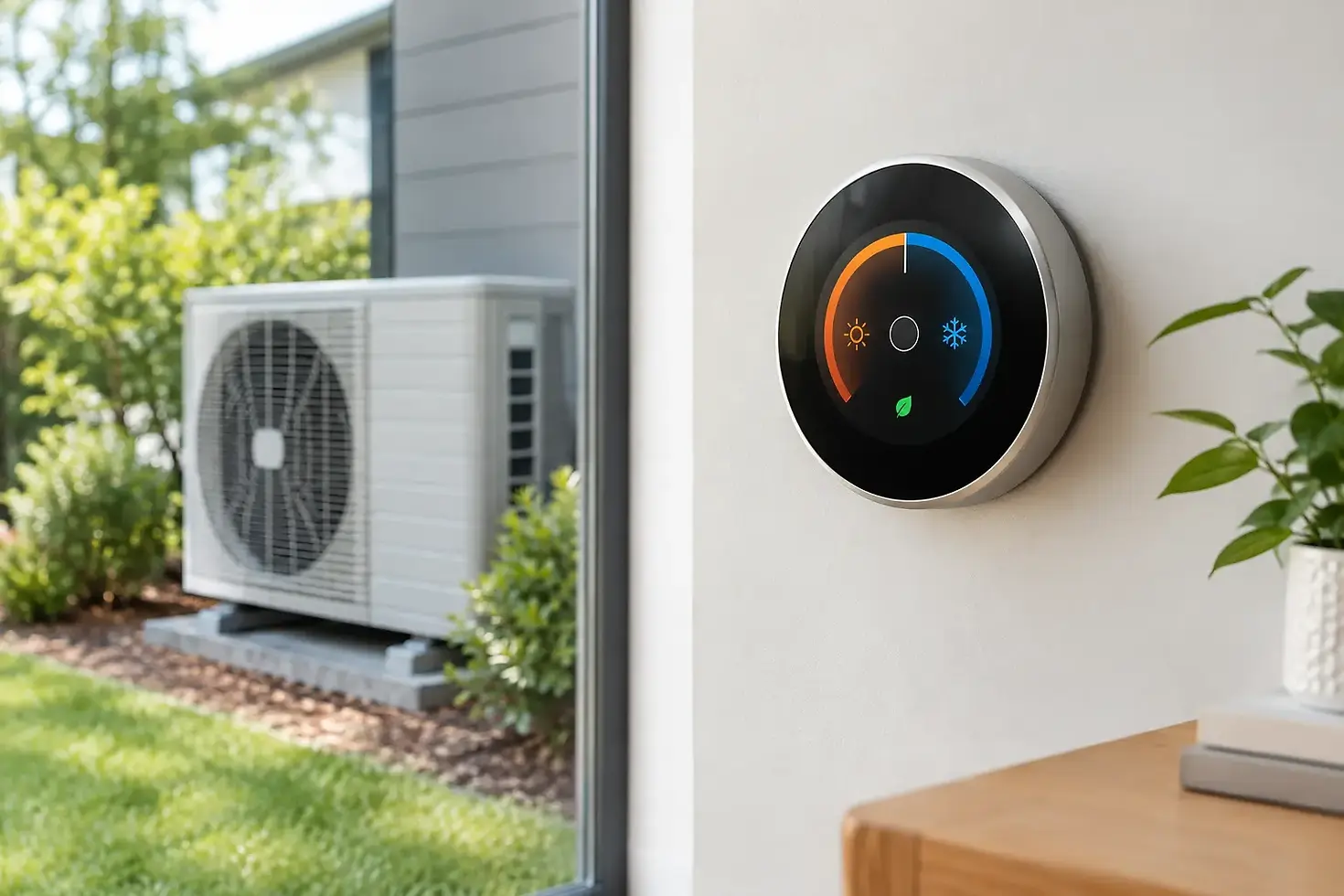
Best Thermostats for Heat Pumps for Your Home
A heat pump can be one of the most efficient ways to heat and cool a home, but the wrong thermostat can make it work harder than it should. The best thermostats for heat pumps do more than look good on a wall. They manage staging properly, limit unnecessary backup heat, and keep temperatures steady through changing Vancouver Island weather.
For homeowners replacing an older thermostat, the choice is not simply between a basic model and a smart screen. Your heat pump type, wiring, backup heating system, indoor heads or ductwork, and daily routine all affect what will work best. A thermostat that is excellent for a conventional furnace may not be the right match for a variable-speed heat pump.
What Makes a Thermostat Right for a Heat Pump?
Heat pumps move heat rather than creating it through combustion or electric resistance coils. That is why they use less energy than many older heating systems. However, efficiency can drop when a thermostat calls on auxiliary or emergency heat too quickly.
A heat-pump-compatible thermostat needs the correct terminals and programming options for your system. In a ducted setup, that commonly includes connections for the compressor, reversing valve, fan, and one or more stages of auxiliary heat. Homes with electric heat strips, dual-fuel equipment, or more than one heating and cooling stage need especially careful setup.
The right thermostat should also allow longer, more stable run times. Heat pumps generally perform best when they maintain a set temperature instead of recovering from large overnight setbacks. That does not mean every home needs a complicated control. It means the control must suit the equipment and be configured by someone who understands heat pump operation.
Best Thermostats for Heat Pumps: Top Options
There is no single best choice for every home. These are dependable thermostat categories and models that are commonly worth considering, depending on your system and priorities.
ecobee Smart Thermostat Premium
The ecobee Smart Thermostat Premium is a strong option for many ducted heat pump systems. It supports multi-stage heating and cooling, can work with remote room sensors, and gives homeowners clear visibility into their schedules and energy use.
Its room sensors are particularly useful in two-story homes or homes with a cooler basement, where the thermostat's location does not reflect the temperature in occupied rooms. Instead of overheating the main hallway just to warm a bedroom, the system can respond more intelligently to the spaces you use.
The trade-off is that ecobee installation and configuration need to be correct. A setting that allows auxiliary heat to come on too readily can increase electricity use. This is a good choice for homeowners who want smart features and have a compatible central heat pump system.
Honeywell Home T9 Smart Thermostat
The Honeywell Home T9 is another practical choice for ducted heat pumps, especially when different areas of the home have noticeably different temperatures. Like ecobee, it can use remote sensors to help manage hot and cold spots.
It offers straightforward scheduling, app-based control, and heat pump compatibility in the right configuration. For a busy household, the interface is approachable without requiring constant adjustments. It is also a sensible option when you want reliable temperature control without adding every available smart-home feature.
Before choosing it, confirm the number of heating and cooling stages your equipment requires. Compatibility charts are useful, but a technician should verify the actual wiring and system setup at the home.
Google Nest Learning Thermostat
The Google Nest Learning Thermostat appeals to homeowners who want a polished design and automated scheduling. It can learn routines over time and offers remote access through an app. For a basic single-zone ducted heat pump, it may be a good fit.
Its main limitation is that automatic learning is not always ideal for heat pumps. Frequent deep setbacks or aggressive recovery can trigger auxiliary heat, which costs more to operate. Homeowners with a heat pump should review the settings carefully and prioritize steady comfort over large temperature swings.
Nest can be a useful thermostat, but it is not automatically the best solution for every heat pump. It is better suited to systems with straightforward wiring and owners who are willing to ensure the heat pump settings are optimized.
Emerson Sensi Touch 2
The Emerson Sensi Touch 2 is a practical smart thermostat with a clean touchscreen and a more familiar thermostat-style experience. It is often a good middle ground for homeowners who want app control and scheduling but do not need occupancy sensors or extensive automation.
It supports many conventional and heat pump configurations. Its simpler approach can be an advantage for households that want dependable control without a steep learning curve. As with any smart thermostat, confirm whether a common wire is available or whether an approved adapter is needed.
Your Heat Pump Manufacturer's Thermostat
For variable-speed, communicating, or inverter-driven systems, the manufacturer's matched thermostat is often the best option. This is especially true for premium ducted systems that use proprietary controls to regulate capacity, humidity, airflow, and defrost performance.
A universal smart thermostat may operate the system, but it may not provide access to every efficiency or comfort feature. In some cases, replacing the factory control with a third-party model can reduce the system to more basic on-and-off operation. That can leave performance on the table.
If your heat pump has a communicating control, ask your installer whether changing thermostats is worthwhile before making a purchase. A matched control may cost more upfront, but it can preserve the comfort and efficiency you invested in.
Ductless Heat Pumps Need a Different Approach
Mini-split and multi-zone ductless heat pumps are usually controlled by their own manufacturer remote, wall controller, or optional Wi-Fi adapter. They generally do not use a standard central thermostat in the same way a ducted system does.
A third-party wall thermostat can sometimes be added, but it may limit modulation or interfere with the unit's built-in temperature sensing. For most ductless systems, the best path is to use the manufacturer-approved control and position the indoor head properly during installation.
If one room is too warm while another is too cool, the issue may not be the remote. It could be system sizing, head placement, airflow, or a need for a separate zone. A qualified heat pump assessment can identify the cause before money is spent on controls that will not solve the underlying problem.
Features That Actually Matter
When comparing thermostats, start with compatibility, then consider features that improve daily comfort. A clear display and simple scheduling matter because a thermostat only saves energy when it is used properly.
Look for adjustable auxiliary heat settings, multiple stages of heat pump support, humidity monitoring where relevant, and remote access if you travel or manage a second property. Room sensors can be valuable in larger homes, but they are not essential in every space.
Geofencing and learning schedules can be convenient, yet they should be used thoughtfully. A heat pump is usually happier holding a moderate temperature than making large daily adjustments. A small setback may make sense when the home is empty for an extended period. Dropping the temperature dramatically overnight often does not.
Avoid These Common Heat Pump Thermostat Mistakes
The most costly mistake is treating a heat pump like a conventional furnace. Turning the temperature up several degrees at once may cause auxiliary heat to activate, particularly during colder weather. That can erase much of the savings a heat pump provides.
Another common issue is installing a thermostat without checking the wiring, system staging, or reversing-valve setting. A thermostat can appear to work while cooling when it should heat, cycling too often, or using backup heat unnecessarily. These are setup problems that should be corrected quickly.
Finally, do not assume a smart thermostat will fix uneven temperatures, poor airflow, or an undersized system. Controls can improve how equipment responds, but they cannot compensate for duct problems, maintenance needs, or an incorrect installation.
Get the Thermostat and Setup Right
The best thermostat choice starts with a clear understanding of your equipment. At C & S Heating & Cooling, our experienced technicians can assess your current heat pump, thermostat wiring, comfort concerns, and available control options before recommending a solution.
A properly selected and configured thermostat helps protect your heat pump investment while keeping your home comfortable through every season. If your system is difficult to control, runs auxiliary heat too often, or leaves rooms uneven, a professional assessment can point you toward a fix that makes sense for your home and budget.


Comments