


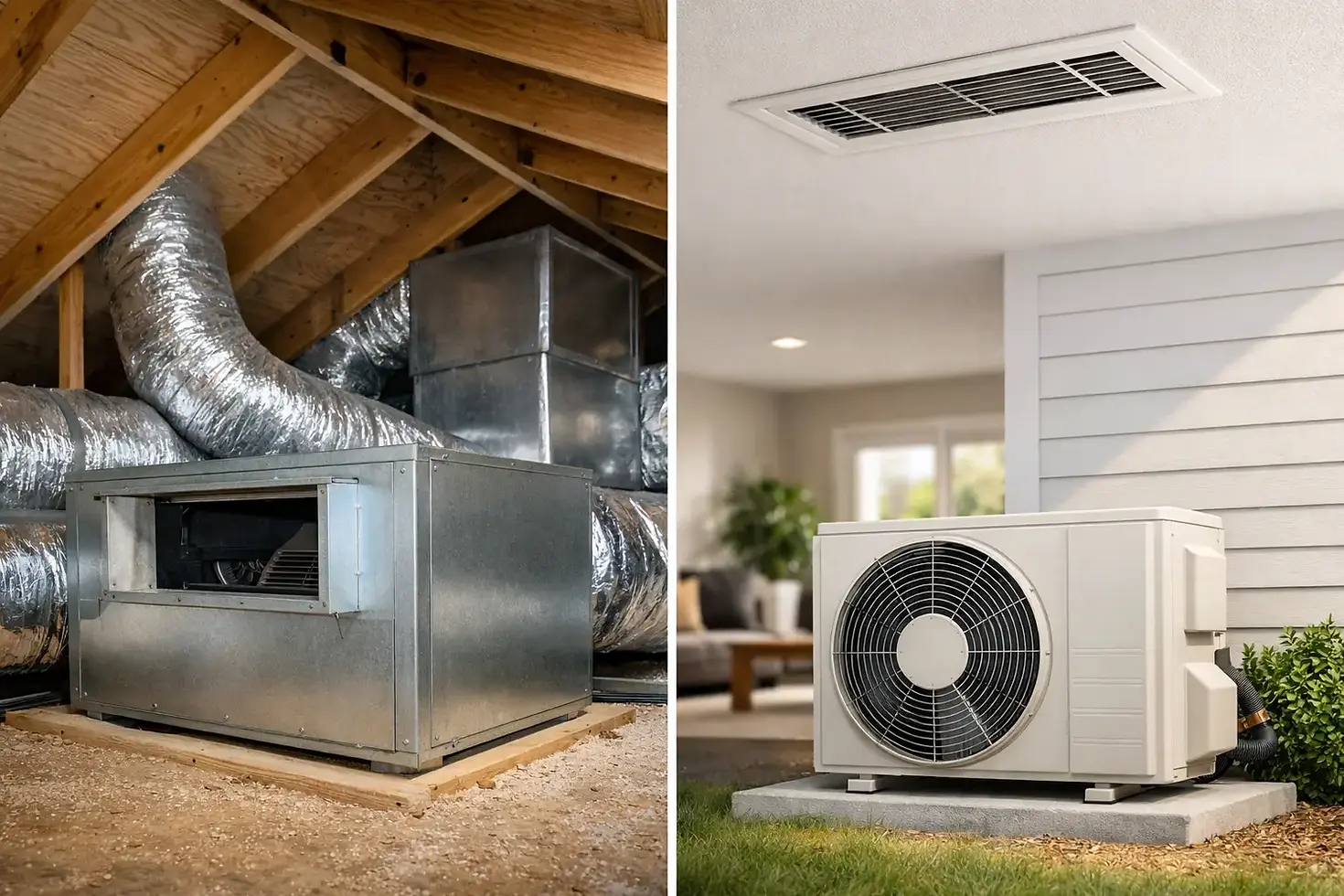
What Is a Ducted Heat Pump?
If your home has rooms that never seem to match the thermostat, or your winter heating bills feel harder to justify every year, it makes sense to ask: what is a ducted heat pump, and is it worth the upgrade? For many Vancouver Island homeowners, it is one of the most practical ways to get whole-home heating and cooling from a single high-efficiency system.
A ducted heat pump is a central heating and cooling system that moves warm or cool air through ductwork to supply the entire house. Instead of creating heat by burning fuel or using electric resistance heat alone, it transfers heat from one place to another. In winter, it pulls heat from outdoor air and brings it inside. In summer, it works in reverse and removes heat from your home, giving you air conditioning through the same ducts.
What is a ducted heat pump and how does it work?
At a basic level, a ducted heat pump has two main parts: an outdoor unit and an indoor air handler or coil connected to your duct system. The outdoor unit captures or releases heat depending on the season, while the indoor component distributes conditioned air through supply vents in each room.
That transfer process is what makes heat pumps so efficient. Rather than generating heat the way a baseboard heater or electric furnace does, a heat pump moves existing heat. That difference is a big reason many homeowners see lower operating costs after upgrading from older electric heating systems.
In a ducted setup, the system uses hidden ductwork to deliver even, centralized comfort. If your home already has ducts in place, installation can sometimes be more straightforward. If it does not, the project may involve new duct design and installation, which changes both cost and scope.
Why homeowners choose ducted heat pumps
The biggest reason people look at a ducted heat pump is simple: it can heat and cool the whole home efficiently. That matters in places where homeowners want reliable winter comfort but also appreciate having air conditioning during warmer months.
There is also the comfort factor. A well-designed ducted system can provide more consistent temperatures from room to room than many older systems. It can reduce cold spots, improve airflow, and create a cleaner look than systems with visible wall-mounted indoor units.
For homeowners replacing an aging furnace, electric baseboards, or an older air conditioner, a ducted heat pump can also simplify things. One system handles both seasons. That can mean fewer compromises and better control over indoor comfort.
Another major factor is energy savings. Every home is different, and actual savings depend on insulation, air sealing, system sizing, and how the home is used. But in general, high-efficiency heat pumps use less energy than many traditional electric heating systems. In British Columbia, rebate programs can also make the upfront investment more manageable when the system and installation meet program requirements.
Ducted heat pump vs. ductless heat pump
Homeowners often compare ducted and ductless systems because both are heat pumps, but they solve comfort problems in different ways.
A ducted heat pump is usually the better fit when you want one central system serving the full house through vents. It suits homes that already have usable ductwork or homeowners who prefer a more traditional whole-home setup. It also tends to appeal to people who want less visible equipment inside the living space.
A ductless system, on the other hand, works well when there is no ductwork, when only certain areas need heating and cooling, or when the house layout makes zoned comfort a priority. It can be an excellent option, but it gives a different look and feel indoors.
Neither is automatically better in every case. The right choice depends on your home, your budget, and what kind of comfort issues you are trying to solve.
What a ducted heat pump can replace
A ducted heat pump can replace or work alongside several existing systems. In some homes, it fully replaces an electric furnace or older central air system. In others, it may be paired with backup heat for very cold weather or used in a dual-fuel setup depending on the equipment and home requirements.
If you currently heat with baseboards and have no ducts, moving to a ducted heat pump is still possible, but it is a larger project than a simple equipment swap. If you already have a forced-air furnace and ductwork in good condition, the upgrade path is often more direct.
This is where a proper in-home assessment matters. The best system on paper can still underperform if the ductwork leaks, the airflow is unbalanced, or the unit is oversized or undersized.
Is a ducted heat pump right for your home?
A ducted heat pump is often a strong option if you want whole-home comfort, lower energy use, and central air conditioning in one system. It is especially attractive for homeowners planning a long-term upgrade rather than a short-term fix.
That said, there are trade-offs. The upfront cost is usually higher than replacing a single electric heater or making a small repair to older equipment. If your ductwork is outdated, undersized, or poorly installed, additional work may be needed to get the performance you expect.
Home layout also matters. Larger homes, multi-level homes, and houses with existing ducts are often good candidates. Smaller homes or additions may sometimes be better served by ductless equipment, or by a combination approach.
Comfort expectations matter too. If your goal is to keep every room within a narrow temperature range year-round, the system design needs to match that goal. That includes load calculations, duct sizing, vent placement, and equipment selection. Good installation is not an extra. It is the difference between a system that works well and one that leaves you disappointed.
What does a ducted heat pump cost?
Cost depends on the size of the home, the efficiency rating of the equipment, the condition of existing ductwork, electrical requirements, and whether any modifications are needed during installation. A replacement using existing ducts will usually cost less than a full retrofit that includes new duct installation.
There is also a difference between purchase price and long-term value. A lower-cost system may not deliver the same efficiency, cold-weather performance, warranty support, or lifespan as a better-quality installation. For many homeowners, the real question is not just what it costs today, but what it costs to run and maintain over the next 10 to 15 years.
This is also where rebates become relevant. Depending on the home, the equipment, and current program rules, rebate eligibility can meaningfully offset installation costs. Working with a contractor who understands approved systems and paperwork can make that process much smoother.
Common questions about ducted heat pumps
One concern homeowners have is whether a ducted heat pump works well in winter. The answer is yes, but performance depends on the model and how the system is designed. Cold-climate heat pumps are built to perform much better in low temperatures than older units, which is important in Canadian conditions.
Another common question is whether the system will feel like furnace heat. It can feel different. Heat pumps typically deliver a steadier, more moderate heat rather than short bursts of very hot air. Many people find that more comfortable once they get used to it, but expectations should be realistic.
Noise is another point worth mentioning. Most modern systems are designed to run quietly, especially compared with older equipment. Still, actual sound levels depend on the model, installation quality, and where the outdoor unit is placed.
Why installation quality matters as much as the equipment
A ducted heat pump is only as good as the design and installation behind it. Even high-end equipment can struggle if the airflow is wrong, the refrigerant charge is off, or the ductwork is not sealed properly.
That is why local experience matters. Homes across Vancouver Island vary widely in age, insulation levels, and heating history. We at C&S Heating and Cooling look at the house itself, not just recommend a unit based on square footage. Proper sizing, careful installation, and clear after-service support are how we protect your investment.
For homeowners who want a dependable, energy-efficient system without guesswork, working with a local team that provides free in-home quotes, Red Seal certified installation, and guaranteed workmanship can make the decision a lot easier. C & S Heating & Cooling helps homeowners compare options based on the home they actually have, not a one-size-fits-all sales pitch.
A ducted heat pump is not the right answer for every property, but for many homes it offers a smart mix of comfort, efficiency, and year-round control. If you are weighing an upgrade, the most useful next step is not more guesswork online. It is getting the home assessed properly so you can see what will work, what it will cost, and what kind of savings and comfort you can realistically expect.


Comments